Open House: 18th February

20829013_1Have you been wondering what’s going on in that big house in Killeagh? We invite the local community to stop by on Saturday 18th February from 2pm-4pm to see what Greywood Arts is all about.

Join hosts Hughie & Jessica Coogan for a cup of tea and conversation. It’s an opportunity to learn about our programming and tour the guest-accessible spaces and artists’ studios. .

Our first artist in residenceclare-dancefest-castleton-2016, Clare Byrne, will share some material from her project in progress: Song and Dance Man (working title), a solo music-and-dance performance piece.

Killeagh has given us a very warm welcome since we arrived, and we are looking forward to meeting even more of our neighbours! Help shape our relationship with our community.

You can RSVP via the Facebook Invite here, or just show up!

For more information email greywoodarts [at] gmail.com or ring Jessica at 083 845 1750.

Artist in Residence: Clare Byrne

We are over the moon to introduce Clare Byrne, our first artist in residence. She arrives from the US in less than a week, and while we are scrambling to get ready, we’ll let you sit back and enjoy some of her work.

at-the-stationClare is a lifelong dancer, choreographer, and performance experimenter, and is currently a Senior Lecturer in Dance at University of Vermont. She works closely with sound, silence, and words. New to songwriting, she will be investigating ways to re-cross-fertilize the roles of dancer and musician through creating a solo music-and-dance performance piece. Clare is exploring how the physicality of playing music translates into meaning and dance in the body, and vice versa. She’s interested in how old bluesmen and women did this, in how popular entertainers do it today, and in integrating more radical contemporary performance art approaches. There are notably few experimental choreographers working this way.


Clare will share an in-progress peek at  “Song and Dance Man” (working title) during our Open House on Saturday 18th February, from 2 – 4 pm

Clare will be teaching the Improvisation Class at Firkin Crane on Thursday 9th February, from 10 – 11:30 am 


clare-guitar-back-copyClare’s plan is to get nitty-gritty in generating dance material while in residence at Greywood Arts. Then, she’ll be putting together this material and other ingredients: the songs, already developed, as well as several characters that she has worked with in past and present dances – Wet Blue, White Witch, and The Folksinger – who are likely to be presences in this show, each with different moods, colours, or dynamics of movement. Clare finds an Irish affinity in her song style, content, and several of her characters, a sort of “blues-folk-style.” There has been a strong flavour of both Irish and African-diasporas’ music/movement style as part of her creative expression. Clare has Irish roots, but has never been to Ireland. She told us she has “a strong intuition that tapping into that motherland juice will be helpful for this project.” We can’t wait to see what she does.

“Oh, I think of myself more as a song and dance man, y’know…” – Bob Dylan

You can hear more of Clare’s music on her website: www.clarebyrnemusic.com

In review, 2016.

Tired. Sticky. Covered in paint and wall paper paste. That’s how we ended 2016. But also with a great feeling of satisfaction over all we’d accomplished during the year.

Slow to start. Dusty. Blistered. 2016 took it’s toll. It was hard to get back into it after the holidays. But we’re flying now. Back at top speed, and then some! We’ve been learning a lot about sanding and refinishing floors, but that’s a story for another post.

In 2016 we:

  • filled 2 dump-trailers full of old wall plaster that came out of the house.
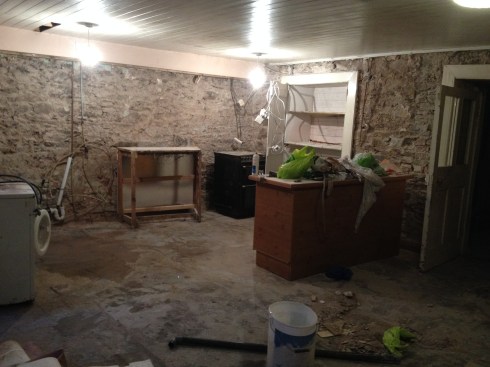
  • spent days tediously uncovering a very old quarry tile floor, so we could move out of the house proper and into this back room “studio” for the duration of the renovation. We cooked on a single burner camping stove (supplemented by a BBQ grill and slow cooker) for 7 months!
  • got Tipsy, our caravan, and did her up to the nines. We hosted three guests from the US and my mother-in-law, and they all loved staying in the cosy, flamingo wallpapered, caravan. 
  • had builders on site from the beginning of June. We’re wrapping up the snag list now!
  • saw our home take shape as loads of stone came out, metal studs went up, then wiring and plumbing, then plasterboard, then plaster, and finally second fixings like light fixtures and radiators.fullsizerender-3
  • developed our organisations values (process!) and devised parameters for the residency program
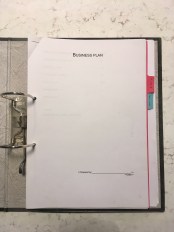
  • did a 5 week business course at SECAD and developed a business plan.
  • got three guest rooms and the guest bath ready to host visitors. Still more to be done.
  • turned on the heat, hot water, and electricity in the whole house on 21st December! The house had never had a heating system beyond fireplaces before.
  • moved back into our bedroom and kitchen on 22nd December, just in time for Christmas.

As we reflect on 2016, it’s hard to let go of how much more there is to do. Sometimes it overwhelms me. But then we pull up the “before” photos or take someone on a tour who hadn’t visited in months, and all the work becomes visible.

I’ve l15622323_10154947525853689_9107031526873707073_nearned a lot about my own strengths and weaknesses this year. I’m learning how to plan further ahead, and am finding ways to stay on task when responsible for shaping my own time. I’m trying to live more in line with the Greywood Arts values. This blog helps keep our process transparent. We must take risks and there will be failures, so I’m trying to let go of fear. It’s enormous, in the back of my mind – what if the whole endeavour fails? In reality, it’s most likely to be learning what succeeds and honing it, and learning what doesn’t work and reshaping it. We will welcome feedback from our guests. And hopefully we will grow, organically, into something we likely can’t even imagine yet.


STAY TUNED FOR: 

Announcing our first artist-in-residence

Applications open February 1st for residencies June 2017-May 2018.

Save the Date: Open House 18th February

 Before & After photos of the renovation

(sneak peek below)


Writer’s Residency Applications Now Open

We are over the moon to announce that applications for the Inaugural Writer’s Residency Program are now open!

The Inaugural Writer’s Residency Program is open to individuals or groups working with the written word, as well as arts related researchers, or other creative projects that require an office-type workspace. We invite applications for a minimum stay of one week and up to six weeks. There is a fee for self-catering accommodation, but workspace is always free.

  • Residency Period: 18 March – 1 July, 2017
  • Applications Due 15th November
  • Notification by 1st December

For application information visit the Inaugural Writer’s Residency Program page, or download the PDF Application Info.

Would you like to work here?

We can’t wait to welcome your creative energy into our space!

NOTE: Residency Applications for the period 1 July – 16 December 2017 will be accepted from artists of all disciplines until 9 January, 2017.  Send inquiries to greywoodarts@gmail.com

Tale of the Sunken Ship

I love the lore surrounding old houses.

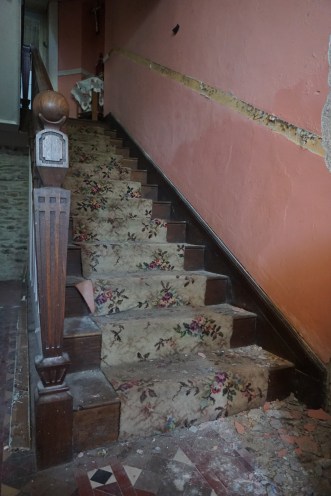
staircaseRecently, our neighbour George approached me in the pub with a story about our own home. He had spoken with a gentleman called Vincent Fitzgibbon, who used to live in Killeagh. When the Hogan family owned our house, it was used as a sawmill that manufactured wooden carriage wheels from 1920 through the mid-fifties. Fitzgibbon shared his memories of working there in 1948-49 with George. 

As the story goes, one day a farmer approached Sam(?) Hogan to make some posts for him. A ship had sunk off the coast of Youghal, and the farmer had salvaged some wood from it. Now, Hogan was too clever to use this beautiful teak for something so utilitarian, so he told the farmer the wood was unsuitable for the task and offered to make the posts out of his own stock. In exchange, he would take the load of salvaged wood.

Apparently, this teak was used to make the staircase and front door to the house. I suspect that it also was used to make the fireplace surround in the master bedroom, too.

Maybe someday we can meet Mr. Fitzgibbon, and record his memories about the house. There is a very Irish tradition of oral storytelling, and I’m afraid writing what I remember after the fact looses much of its richness.

Come dine with us

Have I showed you my cast iron clawfoot bathtub? I’m super proud of my bargain finding here-250 euro (new this would be closer to 2,000!) We did have to borrow a trailer and drive to Killarney, but it was so worth it.

dsc00496

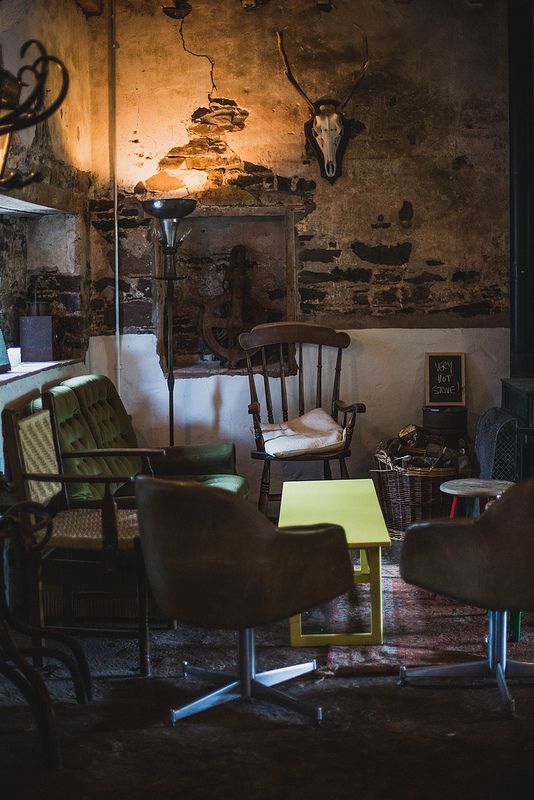
The room pictured above will be our dining room, as well as a place where groups can meet and exchange ideas, or classes can be taught.

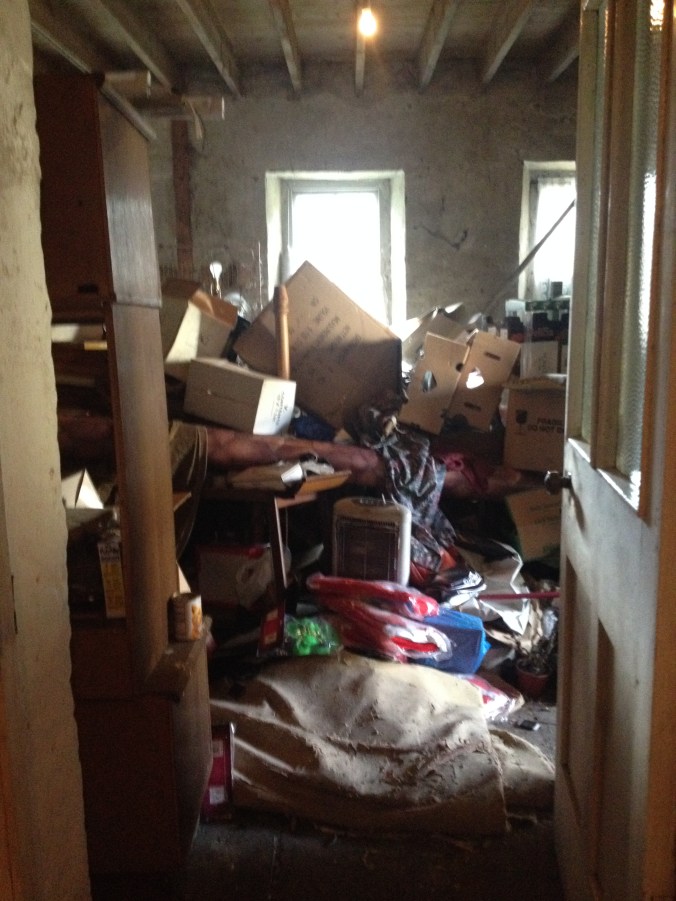
When we bought the house it was full – nearly to the ceiling, of the most miscellaneous objects. We could, however, see there were beautiful limestone slate floors. Among other things buried in the chaos, we uncovered a brand new BBQ Grill, and ten 7-foot tall inflatable snowmen. I bet you can’t wait for Christmas in Killeagh!

16-stone-room-2

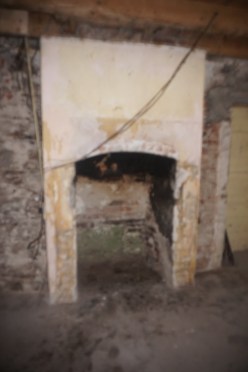
It was so full of stuff, we had no idea that there was an awesome fireplace and oven in the room!

dsc00499

After taking down all of the plaster, we determined that we can’t afford to dry line the room right now. Secretly, we were pleased for the excuse to leave the stone exposed. The engineer warned it will be too cold and damp, but we will wait and see. It can always be dry lined in the future, but meanwhile we will clean up the stone. I suspect the addition of new windows, french doors to the garden, radiators, and a new ceiling will make it feel cozy enough.

I’d like to use lime render plaster, the old-fashioned breathable stuff, to cover the wall where new windows went in. On the two solid walls, I’d like to do a plaster wainscotting half way up, like at Ballyvolane House. I just went to a wedding there and nerded out at getting to see how they did it close up.

6d8f46716d1b727c25f6d87d77bba70a

Photo of Ballyvolane House Barn from Localmilkblog.com, via Pinterest

I imagine the room will be rustic, with a long table and banquette seating along the window side (or maybe repurposed church pews?) There are six metal framed chairs I found in the house that I plan to refinish for the room. We found fabulous antique wall lights, and are doing a barter for two brass chandeliers. I’d love to decorate with wooden cutting boards and spoons, for warmth.

Does anyone know about plastering and want to give us a hand?


Developing our Programming

So the last few posts have been all about the house. Very exciting, I know, but maybe you’re wondering what’s going on with the residency, too?

dsc01182

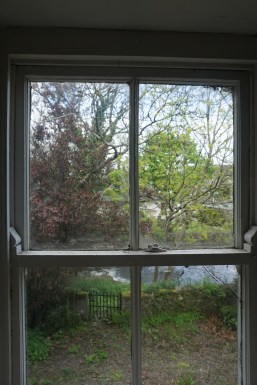
View from the Writer’s Den

I’ve spent some time sussing out the legality of running a business from our home. Essentially, we will be a “casual b&b”, meaning we have no more than four guest rooms. We won’t need to file for planning permission for change of use, nor will we need a fire cert for insurance purposes until we go over 4 guest rooms. This is an enormous relief, because while we hope to eventually do those things, this allows us to open our doors as soon as the house is ready!

Fingers crossed, we will be in business for spring 2017. We are delighted to have our first artist in residence secured for February, but you’ll have to wait to hear more about that.   

As the builders work away, I’m hiding out in the caravan, working on the verbiage about our programming, as well as the application process. I’d love to have a conversation around these ideas, and invite feedback here on the blog, on our Facebook page, or directly via email to greywoodarts at gmail. 

  • Artist’s, what do you want and need from a residency?
  • What kind of support is lacking, or hard to find?
  • What facilities do you need?
  • How can you best represent yourself in the application process, and what makes this easiest for applicants – and reviewers?

I started by looking at the values I want to support via the residency: Process, Collaboration, Interdisciplinarity, Experimentation, Revisiting/Revising Work, Essentiality

  • In this context, I value the plan over the product. An articulate and transparent process – which acknowledges confusion, not knowing, spontaneity, strategy, parameters, etc. – is how we learn about the act of creating, and often about ourselves.
  • Collaboration presents many challenges, and I value the process of communication, negotiation, and problem solving as well as the spring boarding of ideas in pursuit of something unattainable on one’s own.
  • I believe the message supersedes the medium, and interdisciplinary thinking allows for selecting the best method to deliver a concept.
  • I want to offer a place t take risks and try things out – a space where failure is okay, as long as we learn from it.
  • I see value in revisiting and reworking ideas. I often see opportunities that focus on new work, but new doesn’t necessarily mean better.
  • Work at any stage of development is welcome, but there must be a strong drive to make it. Why does the work feel important to the creator, how is it’s creation essential?

Here are some DRAFT ideas for the application:

Greywood Arts is a multidisciplinary artists’ residency space in a private home in Killeagh, Co. Cork, Ireland. We have four bedrooms and can accommodate up to eight guests. There is a fee for self-catering accommodation, but workspace is always free. We are committed to delivering a service that is accessible to artists, and hope to offer fully-funded residency programs as we grow.

Residencies are open to performing and visual artists working in all disciplines, as well as arts related researchers and groups developing other creative projects. Participants must provide their own tools, equipment, and materials. See facilities descriptions or contact us to assess suitability for your project. We regret that we are currently unable to accommodate individuals with reduced mobility as bedrooms and studios are on the first and second floors (2nd & 3rd floors US).     

At present, we won’t be charging application fees.

Tell us about your project:

  • What are you trying to do? (project description)
  • How will you do it? How long will it take?
  • Why are you doing it? Why must this work be created?
  • What is the biggest challenge you are facing with the work?
  • Who are you?  And/or your company/members of your team? Bio/CV/Artist Stmt?
  • What are your goals for the residency?
  • Why is Greywood Arts a good fit for your project?
  • What kind of support do you need?
  • Would you be willing to engage with the community during your residency? (example: workshop, work in progress showing, exhibition, etc)
  • Do you have funding secured for this project? Other residencies?   
  • Work samples (How many?)


What do you think????? I’m trying to live my values by making the creation process of the residency program a transparent one. Let’s learn and grow together, yeah?

And if this isn’t your cup of tea, no worries, we’ll be back to renovation stories (with pictures) tomorrow!

The Process So Far

f you’ve been following along, you know that we spent months sorting through everything in the house. We filled four skips. We took down plaster to prep the walls for dry lining. We filled two dump trailers with rubble.
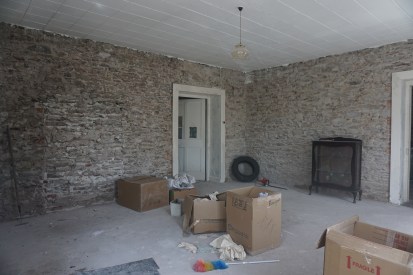
dsc00512
Last autumn, the house was surveyed. We spent hours pouring over the plans, sketching ideas, researching our options. The engineer put our ideas on paper, and we tendered the job. We scaled back, revised, re-envisioned. Once we had our contractor selected, we finalised our plans.

The process since the builders arrived on site in June has gone something like this:

The power to the house was disabled, except for two sockets for the builders, and the cable running outside to the workshop, which has its own fuse board. Our room in the back is functioning with two heaving duty extension cords coming in from the workshop. A temporary water supply was run to the old kitchenette in the back, so we have cold water for washing dishes and cooking.

Most days, three builders arrive at 8am and stay until 5pm. Based on who does what, I’d say they are a mason, a plasterer, and a carpenter. First, they stripped out anything we weren’t able to – like the guest bathrooms, partitions, kitchen fireplace, architraving, and ground floor ceilings.

Old windows were removed anywhere they would be replaced with new triple glazed PVC ones. The wooden lintels above all of the windows, and some of the doors, were either rotted or charred (likely from when the IRA burned out the house in 1920.) They were replaced with concrete lintels. Larger openings, for the two sets of french doors, were given steel beams at the top. One of these, in the dining room, involved removing a few square meters of stone above the door. It had these old metal strips crisscrossing to support from underneath – needless to say that doorway feels much safer now!

A fireplace in a guest room was bricked up, with a hole left for ventilation. Other nooks and crannies were filled. The exterior wall in the kitchenette was built up, as the bay window had to come out and will be replaced with a large PVC window.

We had a bad leak in the back of the house, which turned out to be worse than anticipated.

Water streaming in behind the plasterboard rotted joists on both the ground and first floors. The rotted sections were removed and replaced. As the work was carried out downstairs, a column of stone that was added to make a doorway smaller started to list away from the wall. We decided to remove it and make a bigger opening to the hallway – it looks and feels much less cramped now.

Scaffolding went up to access the roof. Having the slates opened made us really want to pop in some skylights, but our budget just doesn’t allow for that right now.

Wood framing went up to reconfigure the first floor hallway and writer’s nook. A press (closet) was built, which also helps define our office space.

A different team of lads came in to put up the metal stud work wherever we are dry lining.

Channels were jackhammered into the floor to run water supplies to the radiators. Holes were bored through walls and joists to accommodate more pipes and wiring.

We pulled up the old stone slabs in the hallway/downstairs bathroom area. That will get its own post later in the week… The builders levelled and insulated this area, and after plumbing pipes went through, they poured a new floor.

Concrete was poured outside where the oil tank and boiler will go (alas, the air to water heat pump and underfloor heating were not to be!)

Wood sash windows were installed in the original 1767 part of the house. PVC windows were installed on the sides and in back. They look fantastic. I didn’t think I would like the PVC ones, but they actually are great! We weren’t able replace the windows in the studio or writer’s den yet, we will be sanding and painting them to match the chalk colour of the newly installed ones.
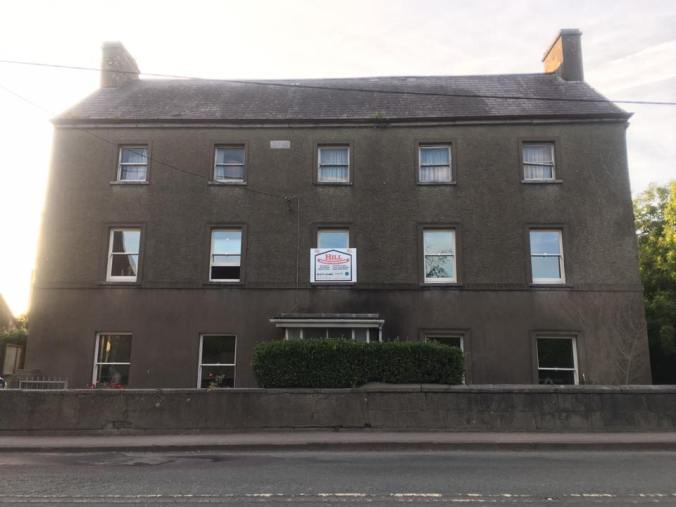
13880174_663209993843611_3522737742441909187_n

The plumber and electrician came in to do the first fix in August. This presented us with a lot of final decisions about guest bathroom layouts and where wall lights would hang. It’s great to be able to decide where your electric sockets will go!

Slabs and insulation were delivered recently, and in the last week three rooms downstairs have gotten ceilings. It’s starting to take shape!

The yard is a disaster zone – we have a rubble pile, and a pile of wood for burning.
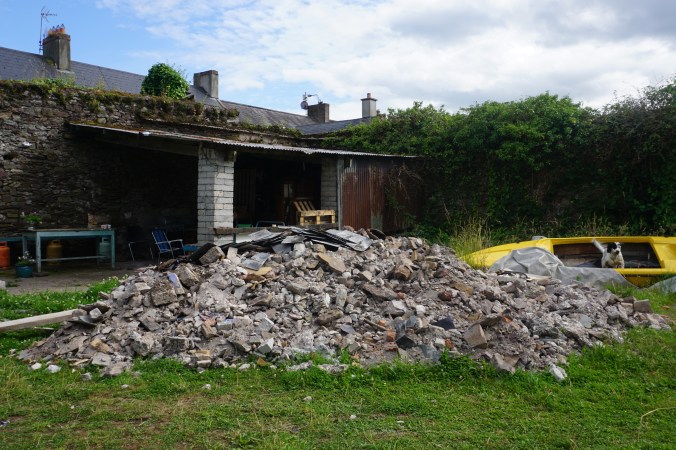
dsc01302

The best part of the process is seeing change by leaps and bounds on a daily basis. After so much planning, each day we have tangible progress.

History of a Kitchen

In our last post (2 months ago, yikes!) we shared our design hopes for our kitchen. I thought it would be fun to look back at the kitchen, and show you where we are today. Things sometimes get worse, before they get better!

Here’s what the kitchen looked like in December 2014, when we first viewed the house:

kitchen

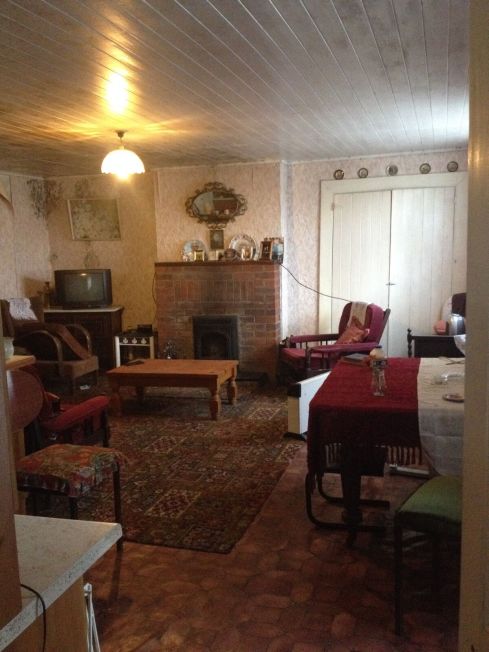
When we moved in, in June 2015, the carpet, sofa cushions, and wallpaper all had to go. The refrigerator and freezer were still filled with food (!) and went straight into the skip (dumpster). The ceiling and walls had to be scrubbed clean of damp and mold. I washed dishes for days. We couldn’t use the cooker until we rewired the room in August, so all our meals were made on a camp stove or outside on the BBQ all summer!

As the weather got colder, the kitchen truly became the hub of the house. It was our sitting room and office in addition to where we cooked and ate. I cooked and baked a lot! You can see us testing out different colours for the presses (cabinets) and walls. During the day, I would move the space heater to wherever I was working, and in the afternoon we would light the fire for the night. It was cozy.
dsc00485

dsc00493

dsc00490

This is what we found when we uncovered the fireplace. The light was too low to get a good shot, but look at the opening! Perfect to house our wood stove. We were hoping to expose the brick underneath, but it is in bad condition. We’ll end up having to stone clad the chimney breast instead.

dsc01296

Here you can see the room gutted, with plumbing run above, and metal stud work for the dry lining in place. Currently, rolls of insulation are stored in the kitchen. Needless to say, we are back to the camp stove / BBQ since the builders began in June…

kitchen

Here is the progress of the french doors. They are going to make an enormous difference! It is still a low light room, which is not ideal for a kitchen. With trimming the trees back outside, adding recessed, pendant and ceiling lights, plus some strategically placed mirrors we are hoping to maximise the light we’ve got.

Looking out the doors to the gate at the river is going to be incredible. I’m imagining sipping my morning coffee on our patio (very low on the priority list…) someday.

Kitchen Dreams

The kitchen is the heart of a home. It’s the room I’ve spent the most time planning for, and it’s the part of the house I’m most eager to see come to fruition. It’s also where I’ll probably spend most of my time.

A while ago I shared my plans for the layout, but today I can share some of the decisions we’ve made and a few of the details we are hoping to acheive.

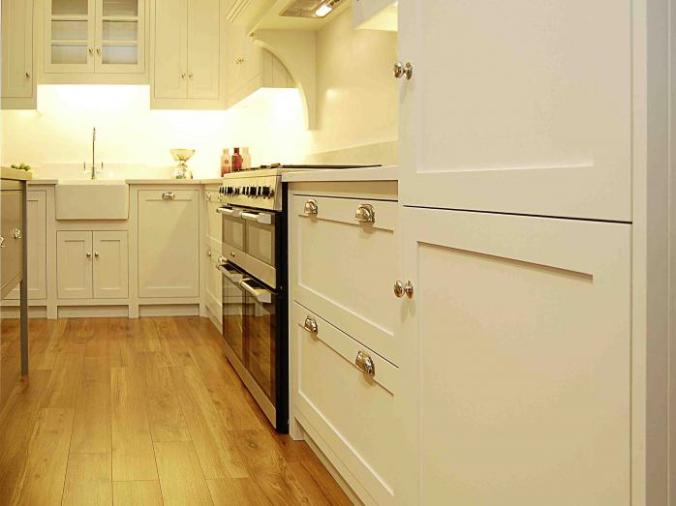
We are going with a classic looking inframe kitchen from Cash & Carry kitchens. It will come primed, and I’m planning to paint it Little Greene’s Hick’s Blue.

lo20res20inframe204

Lyndale Inframe Kitchen from Cash & Carry Kitchens

I really want marble countertops, but most likely we will go for the more durable Santa Margherita Victoria quartz countertops.

The Sweetest Digs has a blog about selecting their Victoria countertops, and it was incredibly helpful in making our decision. (photo below from The Sweetest Digs)

Lately, I’ve been trying to firm up which appliances we’ll be buying. The range cooker has been the hardest decision. Paint color, wallpaper and backsplash tiles have been selected. Kitchen BaseMood Board images (clockwise):

  1. Lyndale Inframe Kitchen
  2. Hick’s Blue
  3. Smeg’s Victoria Range Cooker in light blue is on sale this month, putting it in our price range!
  4. Graham & Brown Wallpaper for either side of the chimney breast
  5. Terracotta tiles (We just decided to tile the floor this week. The reclaimed convent flooring will now go in the library, as doing parquet in there is probably outside our budget). I’m having a hard time finding affordable hex tiles in Ireland, but a place here actually makes beautiful square ones.
  6. Morrocan style cement tiles for the backspalsh

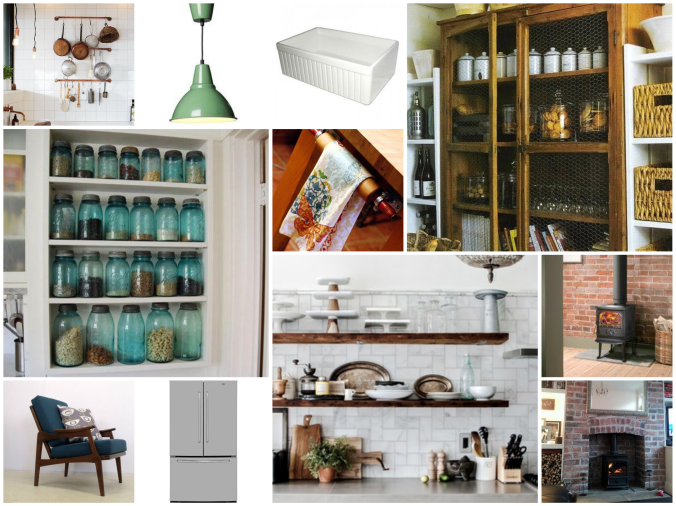
Kitchen DetailsIdeas and inspiration (clockwise-ish):

  1. I’m planning to use the copper pipes that came out of the bathroom to make pot racks.
  2. Ikea pendant lights for over the island.
  3. We’re planning to pick up this gamekeeper sink from Centurion Stone.
  4. The pie safe chicken wire doors might be a cheap alternative to glass for the press (closet) in the kitchen.
  5. Thinking about the Waterford Stanley Fionn multi-fuel stove. I love the long legs and that it has a hotplate on top.
  6. We discovered a big arch behind the ugly fireplace. We’re hoping to expose the chimney breast and fix up the brick (fingers crossed) and then place the stove inside.
  7. I love the rustic plank shelving used in this kitchen and would like to do similar in ours.
  8. I will feel so fancy with an “American Fridge/Freezer” as they call them here.
  9. I have two mid-century chairs (similar to this one) to refurbish that will go next to the wood stove.
  10. Looking forward to displaying my blue mason jars on our open shelving.
  11. I couldn’t part with a little red handled rolling pin when we moved, and now I have the perfect use for it as a towel bar attached to the island.

Here’s the layout again:

It sounds corny, but this kitchen is seriously going to feel like a dream come true. Especially with the french doors opening out to the river.